
From the 2022 to 2024 archive. Written before the current platform, so some product names and details have changed. How the platform works today.
If Data is Missing You End Up Guessing. You Might As Well Bet It All On Black.
Discover how streaming and broadcasting operations teams can reduce guesswork and risks by leveraging continuous data, automation, and comprehensive analytics. Learn strategies to optimize decision-making in high-stakes environments.
Archive note, added September 2026: this post describes the platform as real-time. That is no longer accurate. Watching That runs on a continuous monitor cadence, not real-time alerting. See Early warning on revenue risk, question “Is it real-time?”
If you’ve ever been to a casino you’ll know exactly what’s it like to have to make decisions based on limited, missing data.

What card is the dealer holding? Will the next role of the dice be the numbers you want? All you can do is guess and as the stakes get higher so does the impact of getting it wrong. In reality, of course is the house wins most of the time!
In business, as in the casinos, we work in a high stakes high pressure environments where we are making decisions and taking actions based on limited and missing data.
It’s so common that we have lingo for these events: educated guesses, assumptions, rational approximations. Basically all saying the same thing: “I didn’t know everything I needed to know so I’ve had to guess; somewhat.”
Dangerously, in this world, our guesswork can be quite successful based on limited knowledge. Our perceived power to extrapolate and predict along easily predictable lines keeps us out of trouble.
If we look at some KPIs in certain, biased ways they tend to have high inertia, they don’t tend to change direction or speed over time. So we can get away with simply guessing.
Until, of course, we can’t.
The problem is that operating in an industry like global streaming and broadcasting is like playing at 10 high stakes poker tables at once.
Not only do you have to move continuously from table to table, you also have to focus in on each game in its own right. Getting just one game wrong will be impactful, getting any more wrong exponentially increases the impact.
For streaming operations teams these poker tables are synonymous with:
- Having a dynamic, multi mix of direct campaigns and programmatic suppliers;
- Delivering many channels to many devices and platforms continuously and at scale;
- High quality programming (live sports, top tier content launches) that spikes viewership across the country during 1 to 2 hour windows.
For these teams it’s like being at the casino, in the high rollers room, day in and day out. And, they aren’t playing with their own money! Stressful doesn’t even begin to describe it.
This is why they invest so much into technology that can provide them with instant feedback on what’s happening at each table and, where possible, peer over the shoulder of the other players to see what cards they are holding.
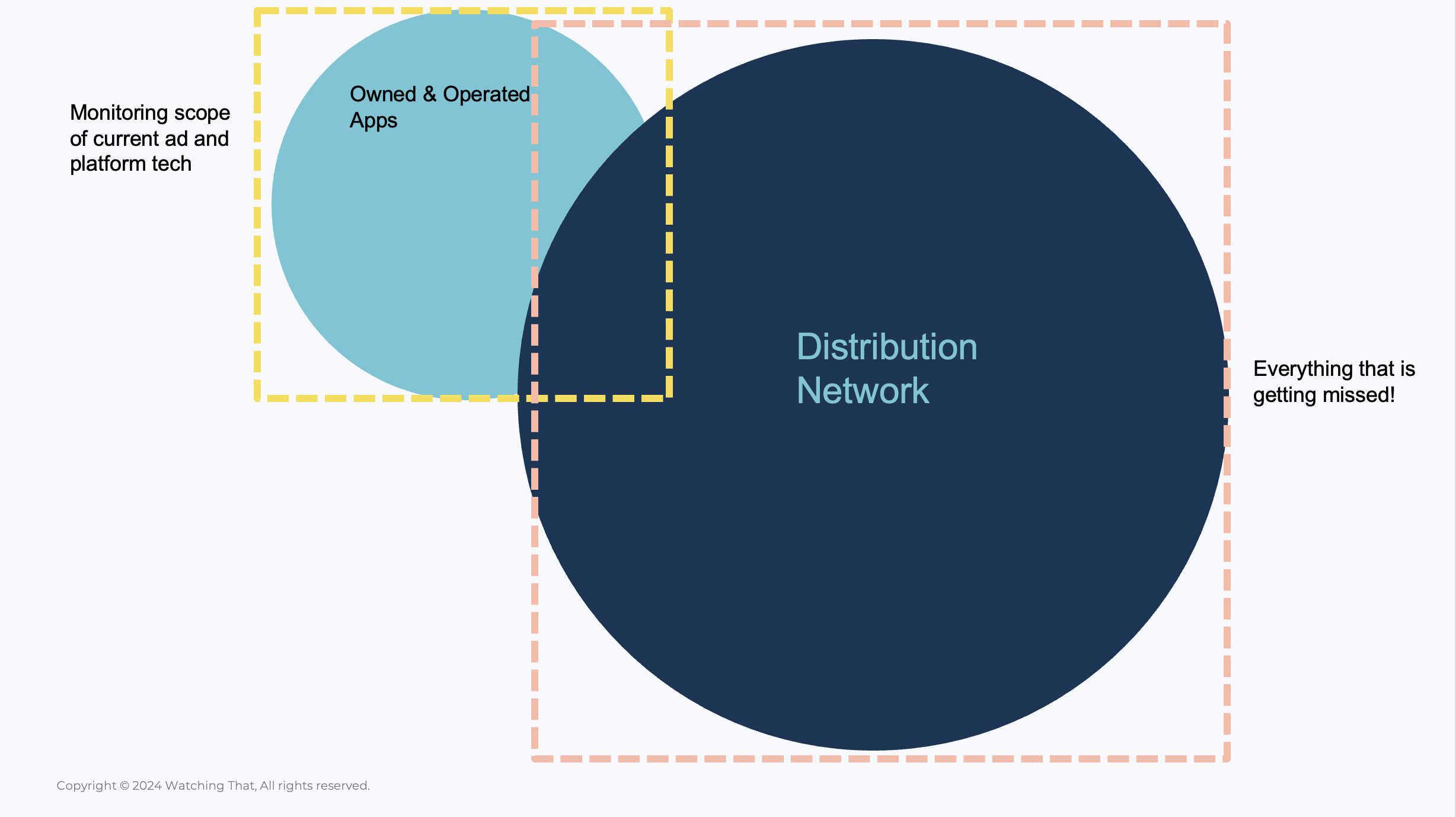
So, how do the best operating teams stack the deck in their favour?
#1 Implement Comprehensive Data Collection Tools :
It’s obvious, but if you’re not even able to collect all the data then you’ll always be relying on guesswork to fill in the blanks.
Data comes from all facets of your operations: ad delivery systems, viewer apps and platforms, streaming networks, programmatic supply and more.
Everything that follows comes from this foundation, so if you do nothing else you need to master this otherwise you’ll have to keep bluffing.
#2 Prioritise Real-Time Analytics, Not Just Analytics
Everyone has “analytics” in their business. It’s table stakes is it not? Well there are analytics and then there are REAL TIME analytics. The difference? The delay you experience in accessing the data and, in turn, being able to act upon it. It’s the difference between buying into the game and going all in when you have a winning hand.
Remember, if you don’t have the data you end up guessing. If you need to act fast, before the data arrives, then you’ll just be guessing. Might as well head to the roulette table and bet it all on black.
#3 Adopt a Holistic, Integrated Top Down View
Often the value in your data is what comes of integrating the scattered shards from all your systems and sources back into its cohesive whole. At a table of 6 poker players, it’s one thing to know the hand of only one of the players vs knowing the cards every player is holding at any one time.
Approaching your data from a holistic, top down view unlocks game changing analysis and decision making. You might not know exactly what cards are coming out of the deck next, but if you know all the cards already in play you can really have a really good prediction of whether to bet or fold.
#4 Elevate from an Operator to a Supervisor via Automation
Leveraging automation technology made available by advancements in AI and Machine Learning is akin to putting intelligent players into your seat at every table. These agents can manage each game autonomously and interact with you only when needed.
By moving from an operator to a supervisor you can not only manage your current tasks in parallel but you can scale to new levels without any increase in effort or costs.
Implementing these strategies will not only reduce your guesswork, it will open up new scale and growth through informed decision making.
Go beyond guessing to experimenting
So now we all agree that having all the data at your fingertips is not just beneficial, it’s essential. The ability to monitor your operations in real time, identify issues before they escalate into problems and optimise performance to maximise your gains makes all the difference between leaving the table with a bag full of winnings or with empty pockets.
Ensure you have deployed solutions that offer:
- Real Time Data Collection and Processing
- Comprehensive Data Analytics
- Integrated Data Models
- Key Task Automations
- Easy Deployment
- Built for Your Purposes
In the end guesswork might be the best you can do in a casino, but in your business it’s a gamble you shouldn’t and don’t have to take. Prioritise getting access to the right data, in the right time frame to eliminate uncertainty in your decision making, reduce risks from your actions and drive your operations and business toward even greater success.
Remember, in the game of ad support streaming and broadcasting the house doesn’t have to the win – you do.
More on report unification
One set of numbers across the ad server and every SSP, and what changes when the teams stop arguing about whose report is right.