
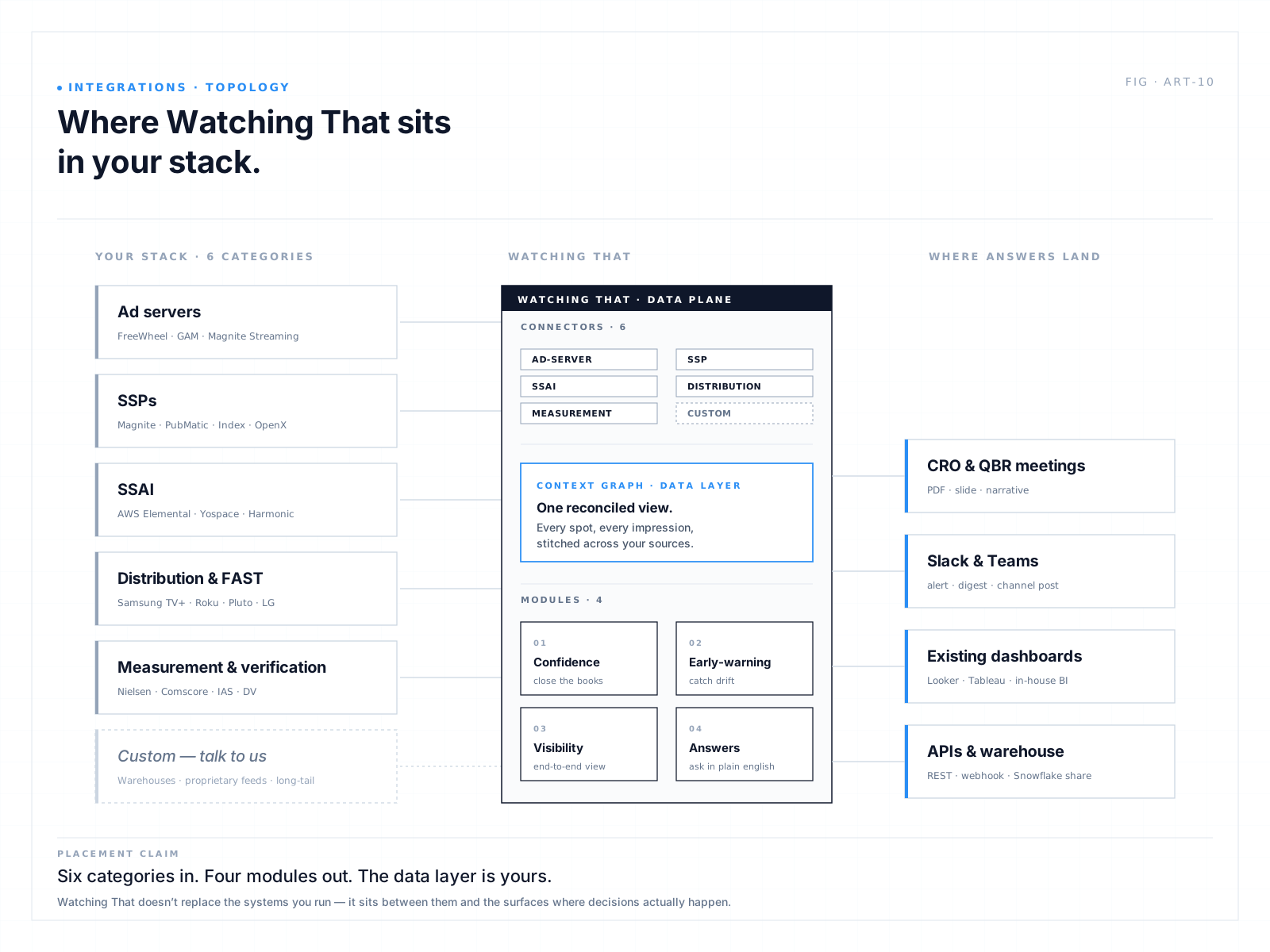
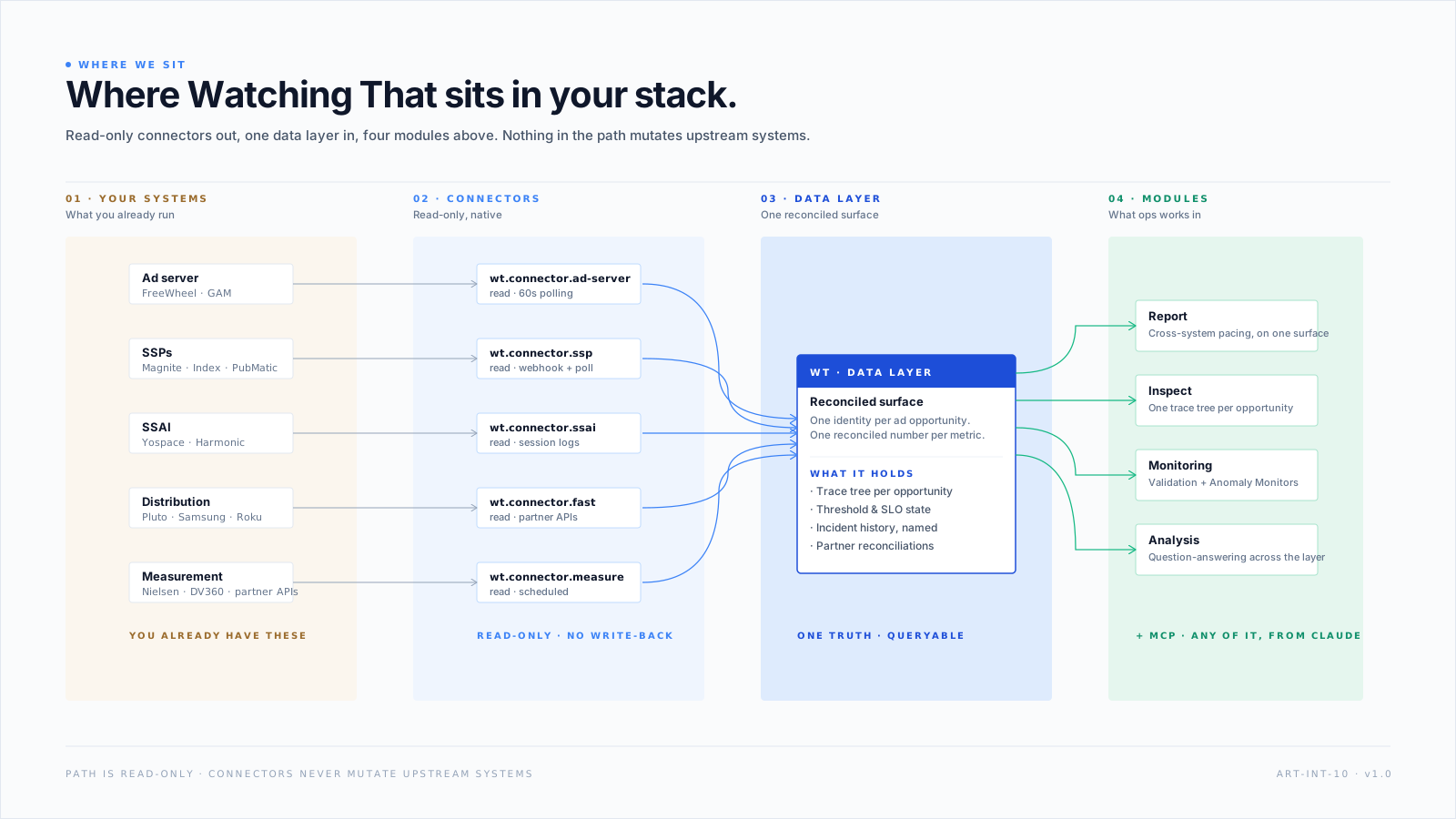
We read from the systems you already run.
Ad servers, SSPs, partner endpoints, distribution feeds, identity, analytics — the stack you have is the stack we supervise. Most customers connect their first system quickly with engineering support, and the rest over the following weeks.
Named connectors in production.
We can integrate with anything that emits ad-ops data — the five tiers below cover the territory. These are the systems we have shipped, named, production-tested connectors for.
Native connectors above + anything else via standard data feed or Collector API.
What we read, and what we do with it.
Ad servers
We read delivery, policy, and config history from your ad server — and reconcile it against what downstream systems actually saw.
SSPs
We read bids, fills, floors, and request/response pairs from your SSPs — and match them against your ad server’s view of the same inventory.
FAST & partner endpoints
We read delivery logs from your FAST platforms and partner distribution. When a break runs on a partner but your log says it didn’t, we surface the gap.
Identity & audience
We read cohort-level signals and match them against delivered impressions — so audience failures surface as delivery anomalies, not as quarterly attribution puzzles.
Analytics & warehouse
We write a clean event stream out to your warehouse, so your analysts work on the same reconciled picture the operators do — not on a parallel extract.
Connector-level detail — authentication methods, API surfaces, retention windows, data-handling — lives in the docs site. This page is a map of breadth, not a reference.
One credential. A week of backfill. Then we’re watching.
Using FreeWheel as the example. A service account, an API scope, and a read-only connection to your ad server. We ingest a week of history for baseline detection, then watch forward continuously.
Other connectors follow the same shape — service account or OAuth, read-only scope, a backfill window, then steady state. Docs carry the vendor-specific steps.

The roadmap is built from your requests, not ours.
New connectors ship regularly as customer needs surface, prioritised by how many customers run the system and how load-bearing it is to their operation.
Tell us what you run. If we hear it twice, it’s on the roadmap. If it’s already there, we’ll tell you when.
See us reading from your stack.
A platform walkthrough uses your real ad server and one SSP as the example. You leave with a working Validation Monitor on the connection you brought.