Each team has half the signal.
Ad Ops has the pacing view. Tech Ops has the error logs. Product & Integrations has the config diff. Each is real; none is complete — so the call runs 40 minutes before anyone agrees on which system misbehaved first.
When revenue moves, three teams open three dashboards and you lose a Wednesday to a 40-minute call deciding which system is wrong. Watching That puts Ad Ops, Tech Ops and Product & Integrations on one session tree — the failing node named, the dollar impact attached, the verdict everyone can re-open and agree on.
Revenue moves on Tuesday. Ad Ops sees a fill drop in FreeWheel. Tech Ops sees something else in Datadog. Product & Integrations suspects a partner template. Each team has partial visibility, so the truth lives in a 40-minute cross-team call — and by the time you’ve reconstructed it by hand, it’s Wednesday lunch and leadership has three slightly different stories. The symptom is in one system; the cause is in another; and nobody owns the join.
Ad Ops has the pacing view. Tech Ops has the error logs. Product & Integrations has the config diff. Each is real; none is complete — so the call runs 40 minutes before anyone agrees on which system misbehaved first.
Fill drops in FreeWheel. The root is an SSP floor change that landed through a partner template two days earlier. Reconstructing that path is a spreadsheet exercise someone does over lunch on Wednesday.
The CRO asks what happened. Three teams answer. The overlap is approximate, the contradictions are live, and the next meeting is scheduled to resolve them — by which time something else has broken.
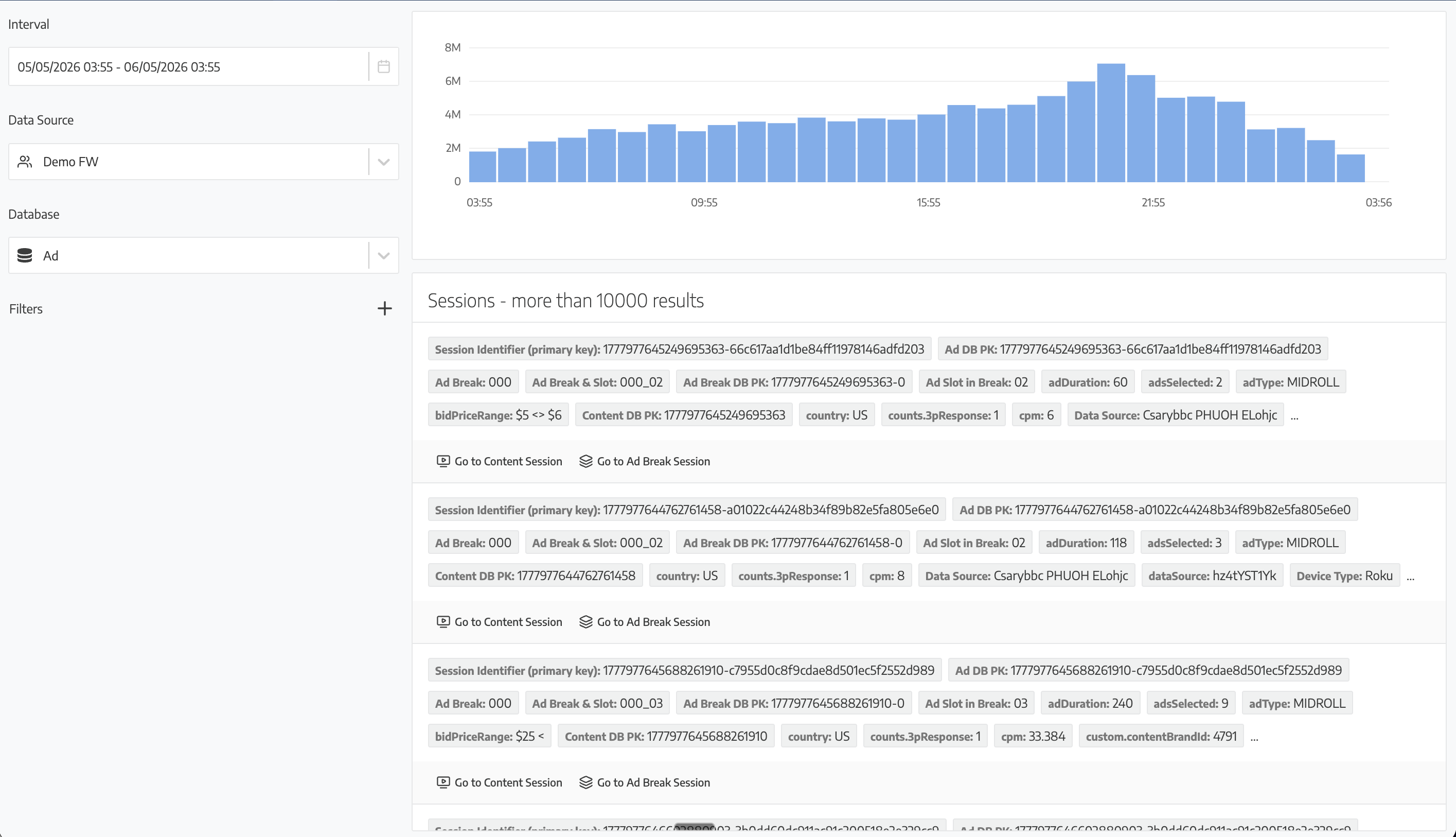
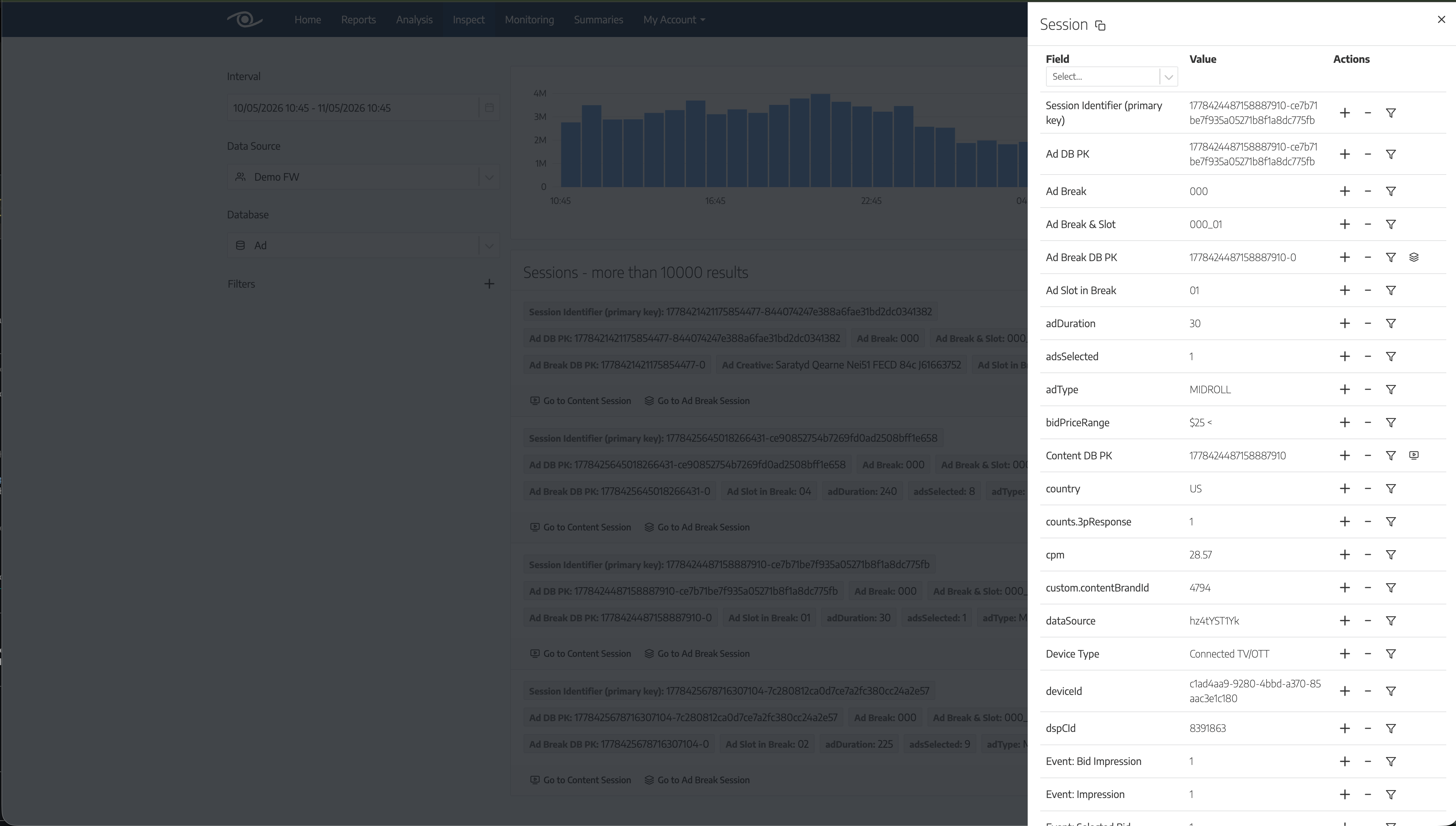
Watching That’s Analysis + Inspect join the full path of every ad opportunity — impression → ad call → response → render — across your ad servers, SSPs and SSAI into one session graph. With Analysis you ask the cross-system question once (“why did fill on Partner X drop Tuesday afternoon?”) and get the answer in one pass, the revenue impact attached. With Inspect every team reads the failing node off the same session tree — named, not inferred — so the verdict is reproducible: a colleague can re-open the session and reach the same conclusion. And every incident is preserved — the next similar one starts from last week’s answer, not a blank page. Answers is one of four needs the Operations Control Platform handles.
Answers is cross-system root cause for ad operations: Watching That joins the full path of every ad opportunity — impression to ad call to response to render — across your ad servers, SSPs and SSAI into one session tree, with the failing node named and the dollar impact attached, so Ad Ops, Tech Ops and Product & Integrations reach one reproducible verdict instead of a 40-minute cross-team call.
The 40-minute cross-team call became a five-minute question-to-root across all three teams. We use it to go to leadership and say: this is costing us, the tech team needs to prioritise it.
— Streamer · US (anonymised)
Today we run the request-count report in FreeWheel, run the same in Datadog, then merge the two by hand. Now there’s one place we can go — and 91% of those cross-system investigations resolve right there.
— Multi-station broadcaster (anonymised)
The session tree adapts to your architecture; the trace logic doesn’t change — three different stacks and three different team structures, one session graph.
…and an any-feed framework for everything else.
See the full integrations list. →That manual merge IS the 40-minute call. Watching That joins the full path across systems into one session tree so the question is answered in one pass, with the failing node named and the dollar impact attached.
No. It sits ACROSS them, reconciling and joining their data into one trace. Your ad servers and SSPs stay exactly where they are.
No. Watching That runs on an automated, continuous monitoring cadence — fast enough to answer “why did it move Tuesday” by Tuesday, not a live streaming feed.
Yes — that's the point. Sessions are reproducible: Ad Ops, Tech Ops and Product & Integrations all open the same tree and the failing node is named, not inferred, so there's nothing left to argue about.
Yes. The session graph is queryable via MCP, so you can ask the cross-system question in natural language from the AI tools your team already uses.
Inspect is the trace they read from. The agreement is the artifact.