
From the 2022 to 2024 archive. Written before the current platform, so some product names and details have changed. How the platform works today.
Let’s Talk About…. Ad Revenue Monitoring
In the world of streaming video, if you blink you’ve missed it. And if you’ve missed it then you can get into trouble pretty quickly. Small issues
In the world of streaming video, if you blink you’ve missed it. And if you’ve missed it then you can get into trouble pretty quickly. Small issues cascade into major outages leading to viewer abandonment, material revenue loss, undelivered campaigns and operational chaos.
With the complexity and fragmentation of your playout landscape increasing unabated, the amount of things you’ll miss if you’re not constantly looking is growing exponentially in number. To not only survive but to keep thriving in this dynamic world you need to have a suitable monitoring framework in place. You simply can’t have your eyes everywhere, at all hours of the day, everyday.
The inconvenient truth is that many organisations believe they have sufficient monitoring in place, when in actual fact they do not. You don’t have to look very far at all to find a team member who can remember, in great clarity and agitation, the last time something went wrong and they were the last to know.
Because of its fundamental importance to the overall success of of a streaming media business and the fact that so many revenue focused folks believe their businesses have “it in hand” when they, quite simply, do not, we’re going to look at Ad Revenue Monitoring: why it matters, what it should be and how to make sure you have all your bases covered.
- Why monitoring is crucial to any industry, not just streaming;
- Why do streaming media business believe they monitor things well;
- Why in fact they do NOT have monitoring setup well at all;
- How to go about setting up a proper ad revenue monitoring platform.
<Yawn> Why are we even talking about “Ad Revenue Monitoring”?
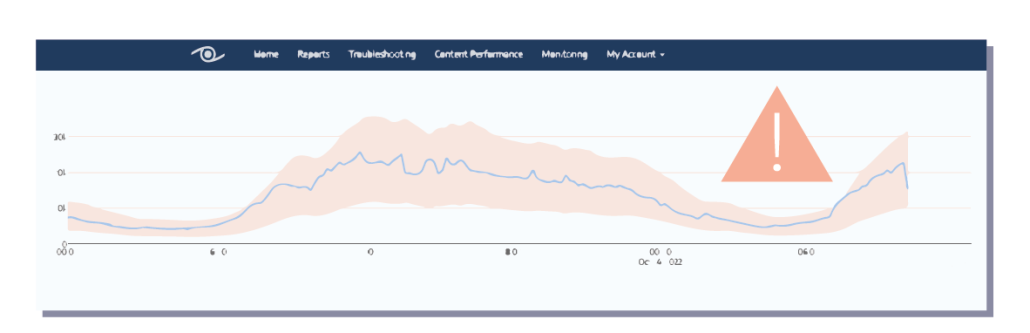
Monitoring is one of those topics that challenges the best of us to stay attentive. Even saying the word Monitoring can induce a stifled yawn. With so many other important, and let’s be fair, interesting things to do in the day, why would we even care about thinking about monitoring our business performance and outcomes?
Especially since surely there are other teams and systems in the business deployed to handle all of this?
The simple answer is because it affects you and your job, so you should care that whatever is deployed is actually fit for purpose. Your purpose.
What if one of your apps or playout endpoints like a FAST platform stops monetising your videos? Who gets blamed? Or what if a viewer issues a complaint? Whose desk does it fall on? And, when a campaign fails to deliver on its promises, who needs to stand up in front of the client and management explaining why?
No doubt you’ve experienced something like this and have felt the frustrations and suffered the pain that comes with not having proper revenue monitoring in place.
So, why do I think we have “monitoring” all sorted?
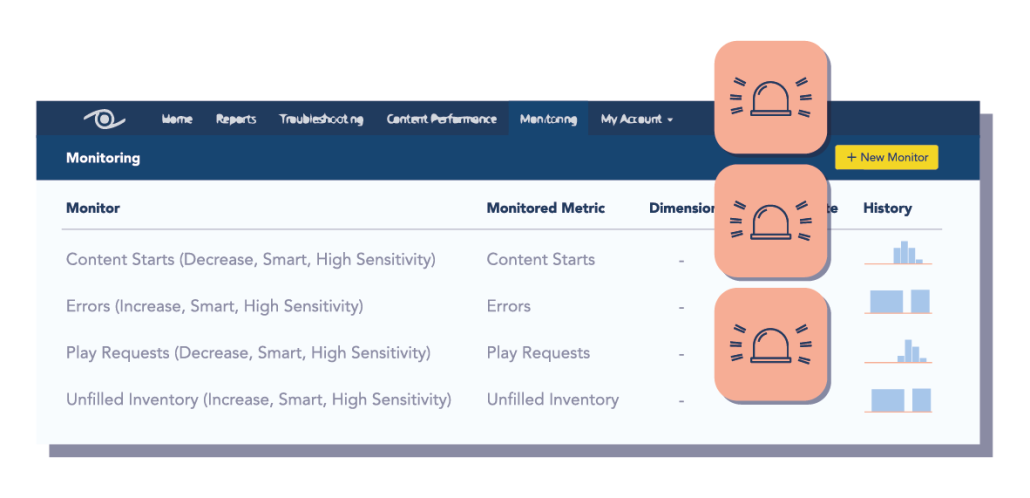
It’s a fact that streaming businesses have invested heavily in monitoring solutions for many years. Ever since the first streaming service launched, engineers have put in place listeners to record how well that stream was performing.
This class of monitoring is commonly known as Quality of Experience (QofE), and is headlined by companies like Conviva and NPAW who provide technology that integrates into your playout applications and can send rich data streams back around the video stream and its playback on the device’s glass.
Another class of monitoring is platform/app based, known as Cloud Application Monitoring. Companies like DataDog and Splunk are category leaders which provide operational teams real-time heartbeats from managed code and applications.
Both of these classes of monitoring overlap to provide coverage of your technology bedrock: lifesign monitoring of your system fundamentals – making sure no one switches off the wrong lights.
The final, third, class is System Diagnostic monitoring that is sometimes provided by the individual ad tech component in the stack. System Diagnostic monitoring is designed to provide you with a receipt of the operation of the system (the ad server serving ads, for example). You pay for the system so they want to make sure you know they are doing what you’ve paid for.
All in all, 3 classes of monitoring sounds like more than enough to tick that box. And it’s that exact belief that is leaving our revenue’s health and performance so very exposed.
Hold up. What do you mean I’m exposed?
Quite simply QofE, Cloud Application Monitoring and System Diagnostics monitoring does not provide you all the cover you think it does.
For starters QofE and Cloud Application Monitoring needs to be written into the code of your applications limiting them to just our owned applications – they are completely blind to any off site/domain inventory (FAST anyone?). Furthermore they are not designed for the ad serving arena. The best they can do is tell you they smell smoke, without telling you where the fire is or what’s caused it.
In the past ad serving was straightforward, all on apps you owned and through a direct link between your ad server and the application. In today’s modern programmatic and addressable world filling an ad is the coming together of between 5 – 10 sophisticated systems – the result is an ad akin to a mixed up Rubik’s cube creating its own unique multidimensional signature.
And it’s this integrated outcome that highlights the shortcomings of the System Diagnostic monitoring. Those systems are designed to blame everyone else when something goes wrong; their contract with you means they do not want to be at fault. So not only do they limit what data they share with you, but they also are quick to shift the blame in some dire “It wasn’t me!” game of pass the buck.
Essentially generating revenue is a complex process filled with many specialist steps and systems that none of the classes of monitoring in place today are either designed for or, indeed, warrant that they should be used in such a manner.
So, while your business has no doubt deployed monitoring solutions it is without a doubt that these systems do not have your back when it comes to driving up your revenue performance and, what’s more, they don’t intend to, so you’re on your own.
Ok. Ok. You have my attention now. I need to care more about my revenue monitoring capabilities. What do I need to do?

The biggest step you can take is to make the business case for investing in proper monitoring of your Ad Revenue.
It’s clear that you are not as covered as you think you are, but in today’s world businesses only spend money on initiatives and technologies that are proven to provide a return on their investment.
So to start with, ask yourself what are the most important aspects of your business? What can it not live without? In ad funded streaming media it’s pretty easy – viewers and advertisers.
Without either you’re out of business – so, how much are you investing today into monitoring the performance, behaviour and health of your viewership and your advertising? As a proportion of the money made is it <1% ? <5%? <10%? How does that compare to investments in content and other technology? Is it proportionate?
What does a day, hour or even minute of downtime cost your business? That’s a pretty simple calculation to make. A quick look back over the last 6 months will no doubt count up just how much downtime you’ve suffered so you can put a currency value to the loss. Are you investing a proportion of that loss into proactive monitoring?
Take it another way: how much time do you and your team spend trying to collect data from your ad tech stack to piece together a picture of what’s happening in your revenue performance? 2hrs? 4hrs a day? What if that time could be unleashed on value creation projects instead?
Put simply, monitoring can’t be seen as a cost but as an investment.
If generating high yield ad revenues while increasing your viewer base is the most important aspect of running your business, then how much are you invested in ensuring that you are in complete control of your revenue generation performance and health?
Once you have buy-in from the business then finding the right solution for you is simply a process of vendor review and requirements development – in some respects this is the easy part. The hard part is not to settle for a patch work of generalist vendors that leave you and the most critical source of revenue exposed.
In fact you can talk to one of our experts on how we solve this problem just drop us a line.
More on platform control
Running ad operations as one supervised system rather than a dozen dashboards.